
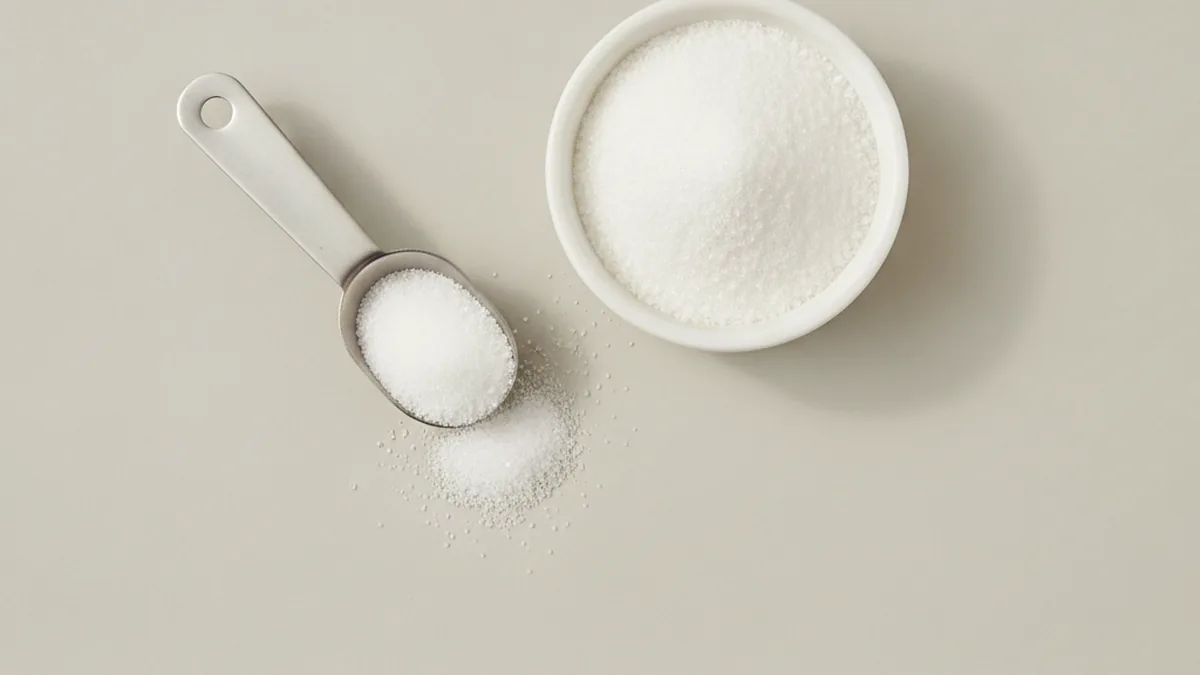
What creatine is
Creatine is a natural compound the body produces from three amino acids — arginine, glycine and methionine — through an intermediate called guanidinoacetate. Skeletal muscle holds most of the body’s creatine stores, around 95 %.
The body’s own production and diet contribute equally to those stores: the body produces about 1 gram of creatine a day and obtains roughly the same amount from food. The liver is the main site of production, although the brain can also make its own creatine.
What it does according to the evidence
- Strength and power in short efforts. The best documented effect. It improves performance in high-intensity sets under 30 seconds, which translates into more accumulated training volume and, over time, more muscle mass.
- Lean mass gain. Part of the initial increase is intracellular water, and that is fine: water inside the muscle cell is an anabolic stimulus, not a cosmetic trick. Over the medium term the increase does include contractile tissue.
- Muscle preservation in older adults. Combined with strength training it has solid evidence in sarcopenia.
- Cognitive function under stress. Emerging evidence in sleep deprivation and in vegetarians, who start from lower stores. Promising, not conclusive.
What it does not do: it does not burn fat, it is not a steroid, it is not hormonal, and it is not a weight loss aid. Scale weight usually rises by one or two kilos at the start from intramuscular water retention.
Creatine is not creatinine
This confusion is constant and worth clearing up because it has clinical consequences.
Creatine is the supplement. Creatinine is a waste product of muscle metabolism eliminated by the kidney, used as a marker of kidney function in blood tests.
Here is the important part: taking creatine slightly raises blood creatinine, because there is more substrate from which it derives.
How much and when
3 to 5 grams daily of creatine monohydrate. Every day, whether you train or not, because the goal is to keep the store full rather than produce a peak.
The loading protocol described in the literature — 20 g daily split into four doses for five to seven days — fills stores faster. It is not necessary: 3–5 g daily reaches the same level in three or four weeks. Loading increases digestive discomfort and offers no long-term advantage.
On before or after training: it does not meaningfully matter. Daily consistency weighs far more than timing. Taking it with a carbohydrate-containing meal may slightly improve uptake.
Creatine in women
It works the same, and women tend to start from lower muscle creatine stores, suggesting potentially greater room for improvement. It does not masculinise, does not alter hormones and does not produce a “puffy” look: the water it retains is intracellular, inside the muscle, not subcutaneous.
There is growing interest in its use during perimenopause and menopause, combined with strength training, for its role in preserving muscle mass and bone density. The evidence is promising and still building.
Which one to buy
Creatine monohydrate, full stop. It is the form studied in practically the entire literature.
Look for the Creapure seal or any third-party testing certification. In Panama it is available in sports supplement shops; certified generic monohydrate is as valid as an expensive brand.
If you have kidney disease, are pregnant or breastfeeding, or take regular medication, check with your doctor first.