
What high cholesterol actually is
Cholesterol does not travel loose in the blood. It moves inside carrier particles, and it is those particles that determine risk. When a laboratory reports a “total cholesterol” of 230, it is adding together things that do not mean the same: the cholesterol carried by LDL particles, the cholesterol carried by HDL, and an estimated fraction from triglycerides.
Total cholesterol is an incomplete figure. Two people can have exactly the same total and a completely different cardiovascular risk: one may have it raised by LDL-c (“bad” cholesterol) and the other by high triglycerides or high HDL-c (“good” cholesterol).
To assess real cardiovascular health you need to look at the breakdown of the lipid profile, not just the total.
The symptoms of high cholesterol
Here is the uncomfortable part: high cholesterol produces no symptoms. It does not cause tiredness, headache, dizziness or heaviness. The vast majority of people who have it feel perfectly well, and that is precisely why it is dangerous.
Visible signs exist in familial hypercholesterolaemia or with extreme, sustained values: yellowish deposits on the eyelids, thickening of hand or heel tendons, or a whitish arc around the iris in young people. They are uncommon and appear late. If you are searching for “symptoms of high cholesterol” because you want to know whether you have it, the honest answer is that you will not know without a blood test.
Five profiles, five treatments
- Isolated high LDL with normal triglycerides and HDL. Usually carries a significant genetic component. Responds to soluble fibre, unsaturated fats and, where appropriate, drug treatment. Diet helps but rarely resolves it alone.
- High triglycerides with low HDL. The classic atherogenic profile. Almost always accompanies insulin resistance, excess visceral fat or alcohol intake. Responds very well and very quickly to cutting free sugars and alcohol.
- Everything high. Usually combines genetic and metabolic components. Both fronts are worked.
- High total because HDL is high. Frequently requires no intervention. The case that generates the most unnecessary anxiety.
- Familial hypercholesterolaemia. Very high LDL from a young age with family history of early cardiovascular events. Requires specialised medical management, with nutrition as complement.
What to eat to lower it
- Enough dietary fibre. The general recommendation is 30 to 38 g of fibre a day for adult men and around 25 g a day for women. For example: oats, barley, legumes, psyllium, apple, citrus. The soluble fibre in these foods is the dietary intervention with the best evidence for lowering LDL, with reductions of between 5 and 10 %.
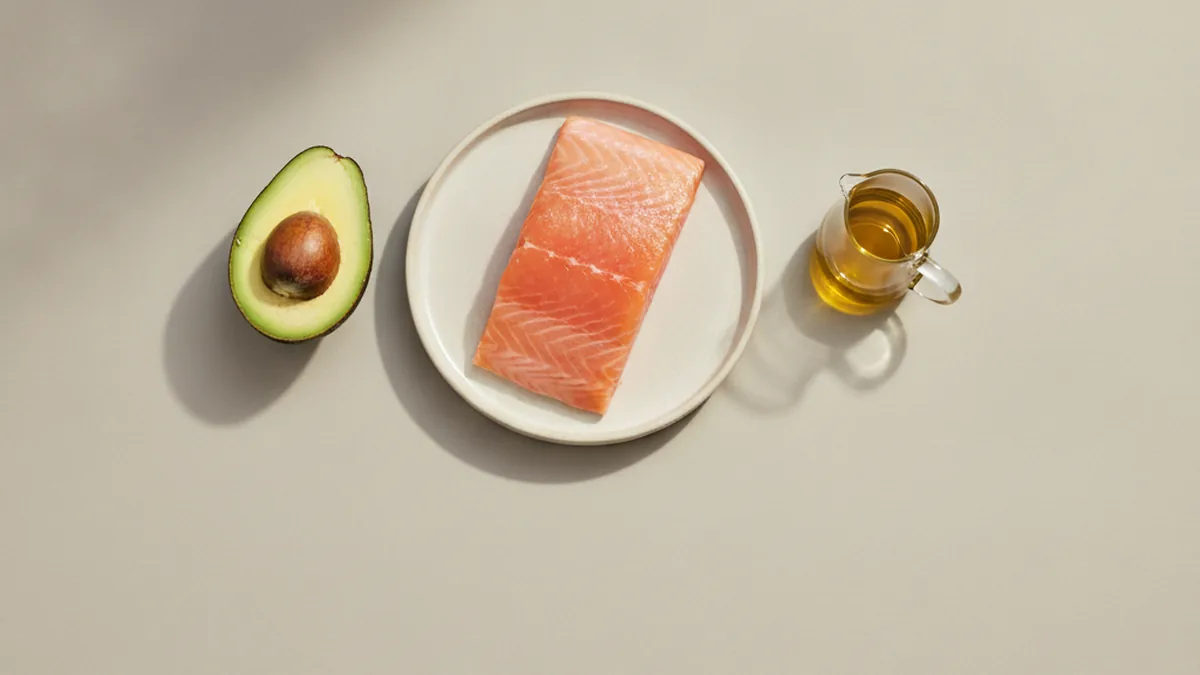
- Replace saturated fats with unsaturated fats. It helps improve the lipid profile and reduces the risk of heart disease. It is not about eating less fat, but about replacing saturated fats with sources of unsaturated fat such as olive oil, avocado, walnuts or oily fish.
- Cut simple sugars and alcohol. The main lever if your triglycerides are high. In Panama that means paying attention to juices, sodas, coffee with condensed milk and weekend beer.
- Eat more legumes. Beans, lentils, chickpeas. Cheap, available and with measurable effect.
Eggs, butter and other durable myths
For decades eggs were restricted for their cholesterol content. That recommendation was withdrawn from dietary guidelines because dietary cholesterol has a far smaller effect on blood cholesterol than was attributed to it. The liver produces most circulating cholesterol and regulates production according to intake.
For most people, one egg a day is not a problem. A subgroup of “hyper-responders” does exist, and in the presence of diabetes the recommendation is more cautious. But the idea that eggs are to blame for your high cholesterol is, in most cases, a distraction from the real causes: excess sugar, alcohol, sedentary living and visceral fat.