
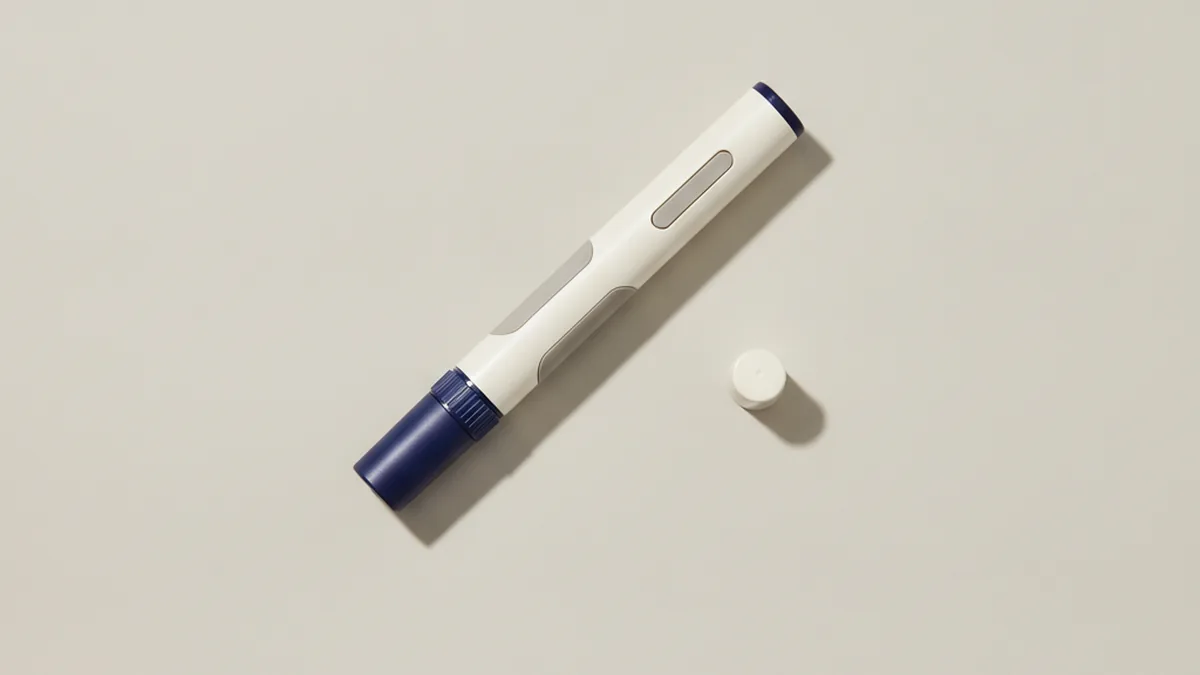
What they are and why they work
GLP-1 receptor agonists — semaglutide, liraglutide — and dual GIP/GLP-1 agonists — tirzepatide — mimic intestinal hormones your body produces when eating. They slow gastric emptying, act on brain appetite centres and improve insulin response.
The result is a marked reduction in appetite, and with it weight loss that in clinical trials reaches 15 to 22 % of body weight. These are effective drugs and, in patients with obesity or type 2 diabetes, they have documented cardiovascular and metabolic benefits.
This article is not an argument against them. It is about what must be done as well.
The problem rarely discussed
In body composition studies conducted during these treatments, a substantial fraction of the weight lost corresponds to lean mass rather than fat. Published figures frequently sit between 25 and 40 % of the total lost.
Translated: if you lose 20 kilos, between 5 and 8 could be muscle, bone and body water. That does not show on the scale, which congratulates you on the full 20.
Lost muscle matters for reasons well beyond appearance. It is the main destination of circulating glucose, the main determinant of your resting metabolic rate, and the best predictor of functional independence after 60. Losing it worsens exactly what the treatment aims to improve.
Why it happens
- A very pronounced calorie deficit. Appetite reduction is so marked that many patients end up eating far less than they need. The more aggressive the deficit, the greater the proportion of lean mass lost.
- Insufficient protein intake. With low appetite, protein is the first thing sacrificed: it is very filling and less appealing. A consistent finding in clinical practice.
- Absence of strength stimulus. Without a mechanical signal telling the body that muscle is needed, lean tissue is energetically expensive and gets sacrificed.
How to protect your muscle
- Protein first at every meal. Between 1.4 and 2.0 g per kilo of body weight daily. With low appetite the strategy is structural: protein is eaten first, before the rest of the plate.
- Strength training two or three times a week. Non-negotiable. It is the signal that preserves tissue.
- Watch micronutrients. Eating much less means less iron, B12, calcium and vitamin D. Deficiencies nobody was looking for appear frequently.
- Controlled pace. Coordinate with your doctor so that dose titration does not produce a faster decline than your muscle mass can tolerate.
- Hydration and fibre. Slowed gastric emptying very frequently produces constipation.
Why you must measure, not weigh
The scale cannot distinguish between these two clinically opposite scenarios:
- Losing 12 kg of which 11 are fat. Excellent result.
- Losing 12 kg of which 5 are lean mass. Poor result, with medium-term metabolic deterioration.
A segmental medical bioimpedance before starting and every 8 to 12 weeks during treatment turns that unknown into data. If skeletal muscle mass is falling, protein and training are corrected before damage accumulates.
In this context it is also useful to watch phase angle, because it reflects cell membrane status and tends to fall when weight loss is too aggressive.
What happens when you stop
Follow-up data show that a significant part of the weight lost is regained after discontinuation. The critical point is that what returns is predominantly fat, while lost muscle does not come back on its own.
That means someone can finish a treatment cycle and, a year later, weigh the same as at the start but with worse body composition than before beginning. That is the scenario to avoid, and it is avoided with the same measures: enough protein, strength training and objective measurement throughout.
If you are considering or already on treatment, nutritional work is not an optional extra: it determines whether the two-year result is good or counterproductive. More detail on the obesity and sarcopenia page.